
MASTER OF SCIENCE IN
Chemical Engineering
Transform Our World’s Materials
As a chemical engineer, you’ll apply the principles of chemistry, biology, physics, and math to solve problems that involve the production or use of chemicals, fuel, drugs, food, and many other products. With your degree, you’ll help design processes and equipment for large-scale manufacturing of materials, plan and test production methods and byproducts treatment, direct facility operations, and more.
GRADUATE OPEN HOUSE
Join us on Thursday, October 22, 2026 to meet faculty, explore graduate programs, learn about admissions and financial aid, and hear from current students. Register today!
ENTRY TERMS:
- Fall
- Spring
SCHOLARSHIPS AVAILABLE:
- Apply to a master’s program before the application deadline to be considered for scholarships
APPLICATION DEADLINES:
- Fall: January 15
- Spring: September 15
Ready to take the next step?
For more information about the MS in Chemical Engineering program, including application requirements, please complete the form below.
GRADUATE OPEN HOUSE
Join us on Thursday, October 22, 2026 to meet faculty, explore graduate programs, learn about admissions and financial aid, and hear from current students. Register today!
ENTRY TERMS:
- Fall
- Spring
SCHOLARSHIPS AVAILABLE:
- Apply to a master’s program before the application deadline to be considered for scholarships
APPLICATION DEADLINES:
- Fall: January 15
- Spring: September 15
Choose Your Area of Study
A master’s in Chemical Engineering from Tufts is designed to build on the foundation of an undergraduate engineering education. All students will gain an in-depth understanding of molecular thermodynamics, transport phenomena, and chemical kinetics and reactor engineering. Plus, you’ll have the opportunity to pursue electives covering the topics you’re most interested in, from surface and colloid chemistry to engineering management.
$121,860
The average salary for a chemical engineer in 2024*
*Source: bls.gov
3%
Jobs are expected to grow by 2034 in the U.S.*
*Source: bls.gov
125,000+
Join a network of Tufts University alumni
2
Convenient schedules, full-time or part-time
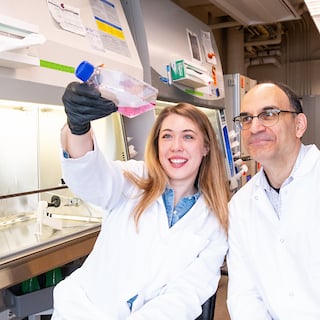
"Although I worked in related fields before, my time at Tufts has significantly expanded my skill set. Beyond data generation, I’ve developed mentorship experience, strengthened my scientific writing, and learned to manage independent projects while contributing to a collaborative research environment. Overall, Tufts has helped me grow as both an independent scientist and a member of a broader research community."
Samantha Kruzshak, Graduate Student in the Department of Chemical and Biological Engineering
Program Highlights
- Small class sizes
- Personalized path of study
- Real-world projects and internship opportunities
- Mentorship from professors at the top of their fields
- Collaborative research that crosses disciplines
- Five miles from the high-tech hub of Boston
- One-on-one career advising and workshops
- Extensive professional development training and resources
GRE Waived
GRE scores are not required for applicants who have an undergraduate or graduate degree from a U.S. institution. GRE scores are required for applicants who don’t have a degree from a U.S. institution.
Earn Two Degrees in Just 2 Years
At Tufts, hone your innovation, leadership, and management skills alongside your technical skills and graduate ready to lead. On-campus students can apply to our dual degree program and earn an MS in Innovation and Management, Engineering Management, or Technology Management & Leadership and an MS offered by one of the six academic departments in the School of Engineering. Earn both degrees in an accelerated timeframe and at a reduced cost.
Where Can You Go From Here? Anywhere You’d Like.
As a chemical engineer, you’ll work on the forefront of new emerging technologies. You’ll help conceive and design the many processes that produce, transform, and transport our world’s materials—and you’ll be involved with the development every step of the way, from experimentation in the laboratory to implementation of technology and full-scale production.
At Tufts, the MS in Chemical Engineering is so much more than a program—it’s a tight-knit community of students, faculty, and staff. Collaboration is not only common, it’s key. And you can count on career advice and network connections from experts in the field.
Here are some great examples of student-faculty collaboration in our department:
- In the Tufts GENELab, PhD student Bricker Lake and Professor and Dean of Research Matt Panzer are studying a new quantitative metric for identifying a class of fluids with applications in green technology.
- Luca Mazzaferro, EG23 and EG24, earned his MS and PhD in chemical engineering from Tufts, developing new polymers that have shown groundbreaking promise as on-demand dissoluble burn dressings.

Graduate Cooperative Education (Co-Op) Program
The School of Engineering’s Graduate Cooperative Education (Co-Op) Program offers on-campus MS students numerous advantages specific to the engineering discipline. Engineering co-op programs provide students with the opportunity to apply the theoretical principles they have learned in their coursework to real-world engineering projects. This practical experience enhances their understanding of engineering concepts and prepares them for the challenges they may face in their future careers.
Discover Academic Excellence
The Tufts chemical engineering program is distinguished by its opportunities to work closely with faculty every step of the way. Graduate students have the chance to collaborate with and learn from some of the most renowned experts in the country, all while seamlessly transitioning from graduate studies to a full-time career.
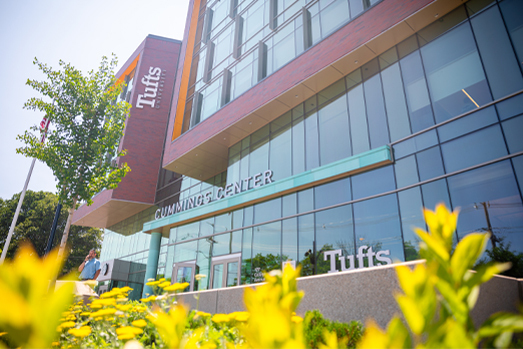
About Tufts University
What do you get at Tufts? A rigorous engineering education in a unique environment that blends the intellectual and technological resources of a world-class research university with the strengths of a top-ranked liberal arts college.
At Tufts, you’ll work with world-renowned engineering faculty at the top of their disciplines. Combine classroom teaching and hands-on learning to earn a degree that will prepare you for success. Take advantage of Tufts’ dedicated career and networking resources, explore the Tufts campus just a few miles from the high-tech hubs of Boston and Cambridge, and get ready for the next step in your professional life.